Living with Psychosis

A resource hub offering practical tips, compassionate guidance, and evidence-based information to support daily living and personal growth.

A neatly organized wooden writing desk with a closed, fabric-bound journal titled “Life with Psychosis” resting at the center, beside a clear glass of water and a small, healthy green plant in a matte white ceramic pot. The desk sits near a large window overlooking an abstract, softly blurred cityscape at dusk. Cool, diffused natural light mixes with the warm glow from a minimalist desk lamp, creating gentle shadows and calm contrast. Photographic realism with a clean, modern aesthetic, shot at eye level with a shallow depth of field that keeps the journal in sharp focus while the background softly fades, evoking a grounded, educational, yet hopeful atmosphere suitable for a professional mental health blog.
A stack of carefully labeled, color-coded binders and notebooks on a smooth light-ash shelf, each spine clearly marked with topics like “Coping Strategies,” “Treatment Options,” and “Daily Routines.” Beside them, a tablet displays a clean, professional mental health infographic with simple icons and muted blue and green tones. Soft overcast window light enters from the left, casting subtle, reassuring shadows and gentle highlights along the edges of the binders. The composition follows the rule of thirds in photographic realism, with the focus on the labels while the background shelves blur slightly, conveying an organized, trustworthy hub of educational resources about psychosis.

Understanding everyday life

We blend expert knowledge with lived experience to help you navigate psychosis, reduce distress, and build a meaningful routine.

13 hits

13 hits

13 hits

Latest posts

Discover personal stories, practical strategies, and science-backed insights designed to empower you on your unique mental health journey.

Photo by fish socks on Pexels.com

Practical guidance

From crisis planning to daily routines, we offer clear steps, supportive language, and resources you can trust.
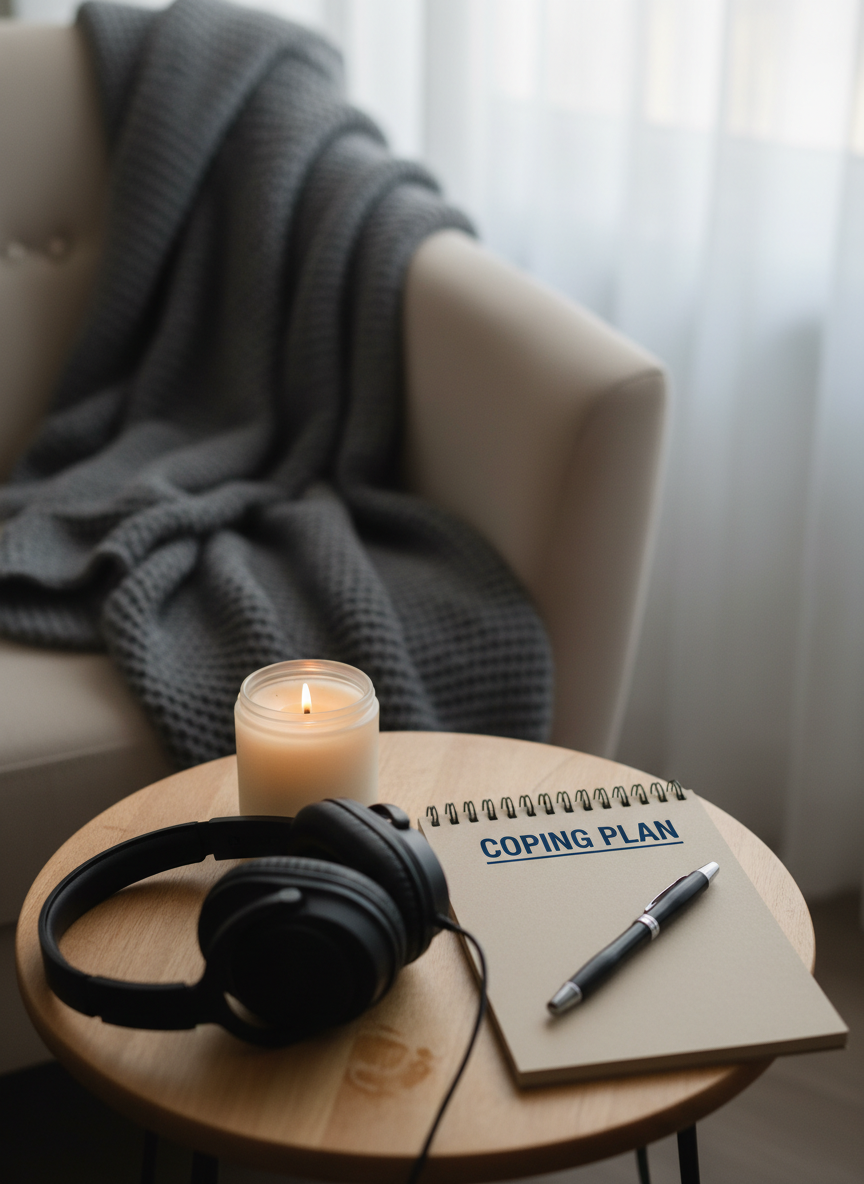
A cozy corner of a room featuring a plush, neutral-toned armchair draped with a textured gray blanket, facing a small round wooden side table. On the table rest noise-cancelling headphones, a half-burned soy candle in a frosted glass jar, and a notepad titled “Coping Plan” with a pen laid across it. Soft, late-afternoon natural light filters through sheer curtains, giving the space a warm yet gentle glow. Photographic realism, shot from a slightly elevated angle, with a shallow depth of field so the coping tools are crisp while the armchair and curtains softly blur, creating a calm, safe atmosphere for learning about managing psychosis in daily life.
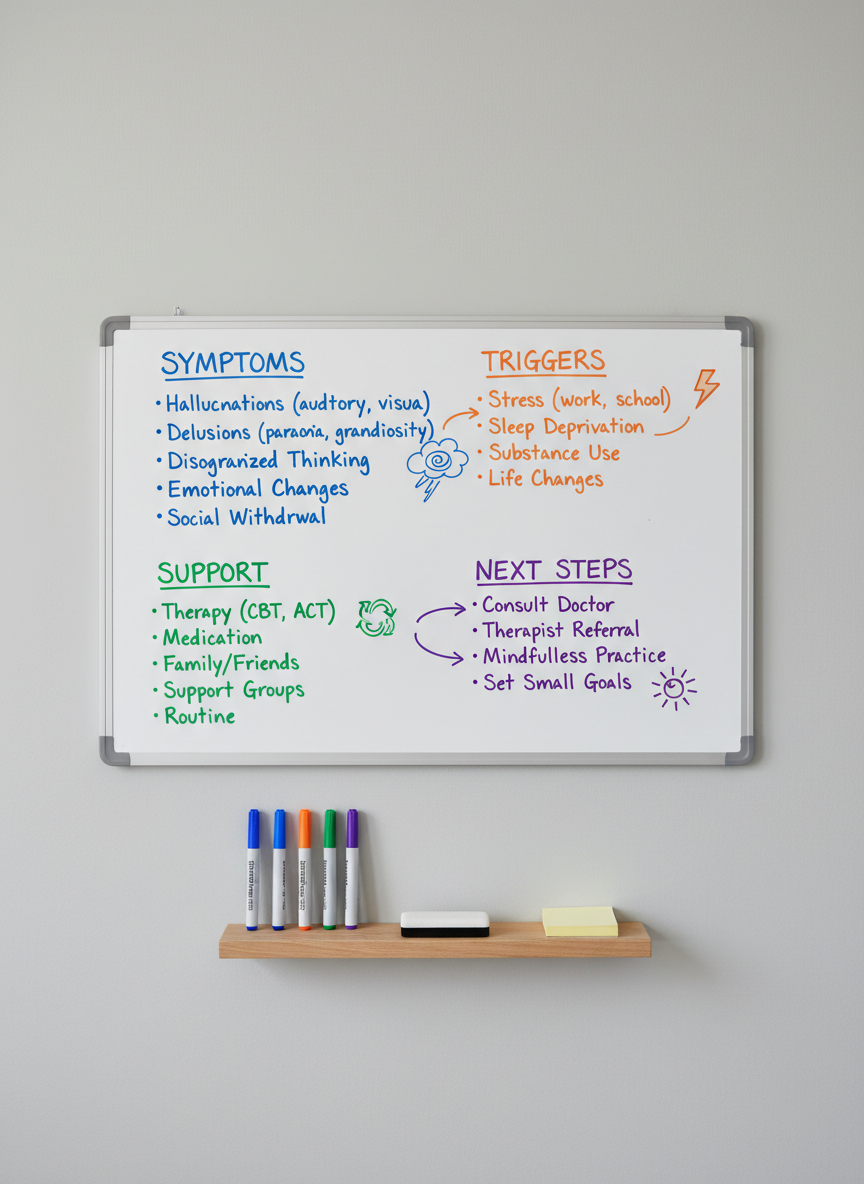
A minimalist whiteboard mounted on a light gray wall, covered with neatly written, color-coded notes and arrows. Sections are labeled “Symptoms,” “Triggers,” “Support,” and “Next Steps,” each in different ink colors, with simple hand-drawn icons like a cloud for overwhelm and a sun for progress. Below the whiteboard, a small shelf holds dry-erase markers, an eraser, and a neatly stacked set of sticky notes. Bright, diffused daylight from an unseen window illuminates the board evenly, creating a clean, clinical yet approachable feel. Photographic realism with an eye-level, straight-on composition and sharp focus throughout, reflecting structured, educational guidance for understanding psychosis.
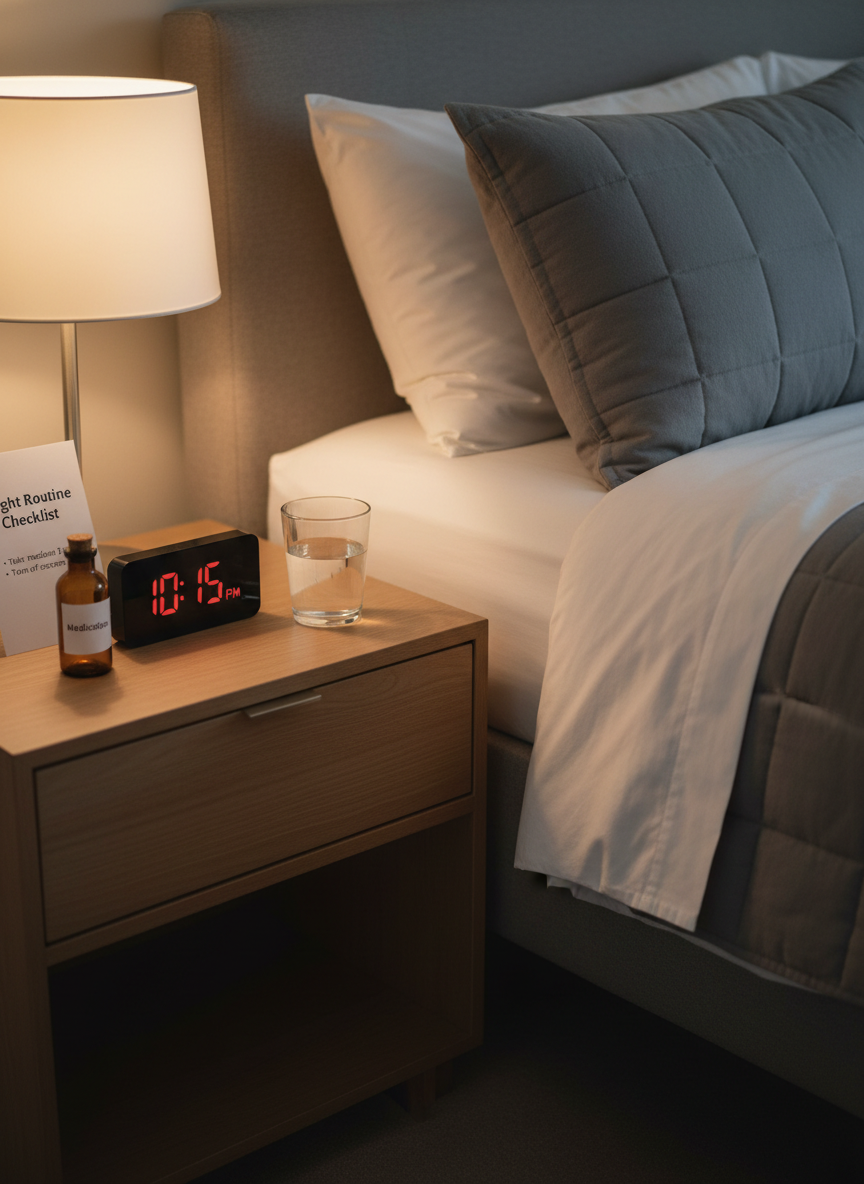
A modern nightstand beside an unoccupied, neatly made bed with crisp white linens and a soft gray quilt. On the nightstand sits a digital alarm clock showing 10:15 PM, a small amber glass bottle labeled “Medication,” a simple glass of water, and a paper card titled “Night Routine Checklist” with bullet points partially visible. Warm bedside lamp light pools gently over the objects, leaving the rest of the room in soft shadow. Photographic realism, captured from a slightly elevated side angle, with the nightstand in sharp focus and the bed gently blurred, evoking a practical, reassuring mood about establishing consistent sleep and medication routines while living with psychosis.

Contact us

Reach out with questions, concerns, or feedback. We respond with empathy and practical advice to help you feel heard and supported.

← Back

Thank you for your response. ✨

Stay updated

Get monthly tips, coping strategies, and stories from lived experience, delivered straight to your inbox.